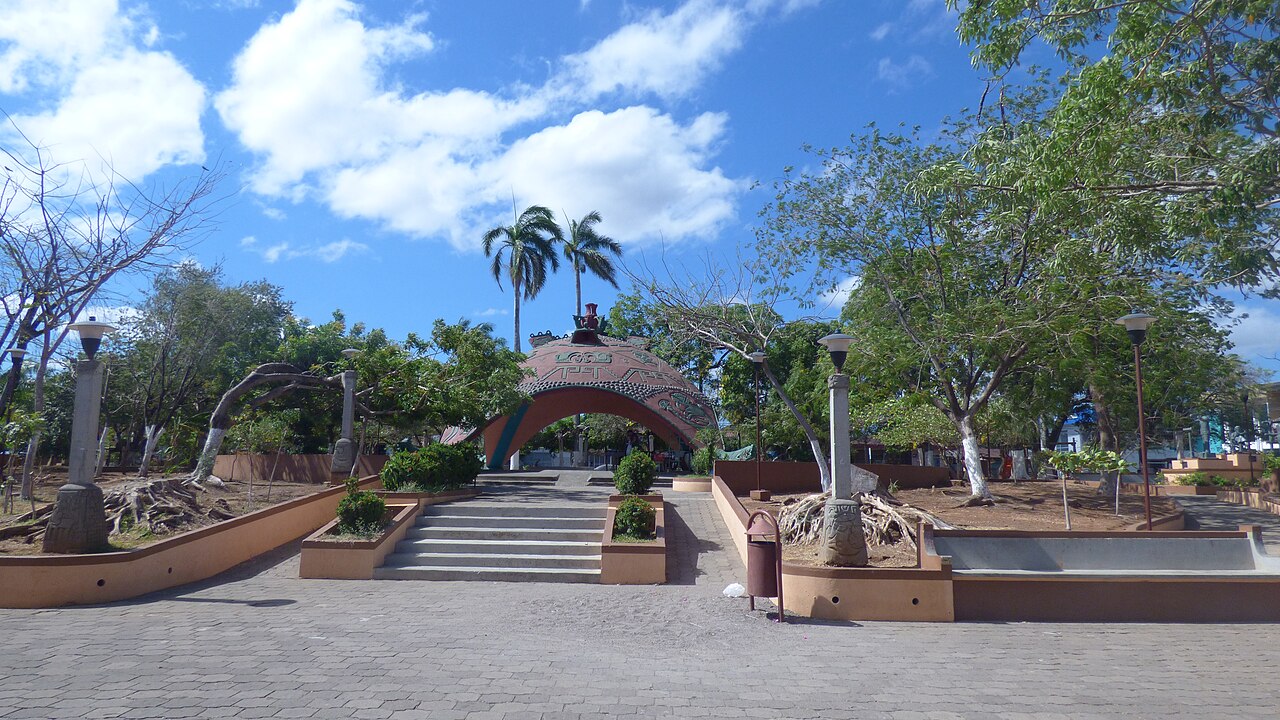
Santa Cruz is about an hour's drive south of Ocotal, out on the Guanacaste plains, and for most of the year it's a quiet little town with a park shaded by big trees. In January it becomes another place. Costa Ricans call it the Ciudad Folclórica, the folklore city, for the care it takes to keep its dances, music and religious festivals alive, and the main reason is the Fiestas Típicas Nacionales, held every year in mid-January, around the 15th: several days of processions, bulls, marimba and corn dishes. Since 2021 these celebrations have been part of the country's intangible cultural heritage.
The Black Christ of Esquipulas
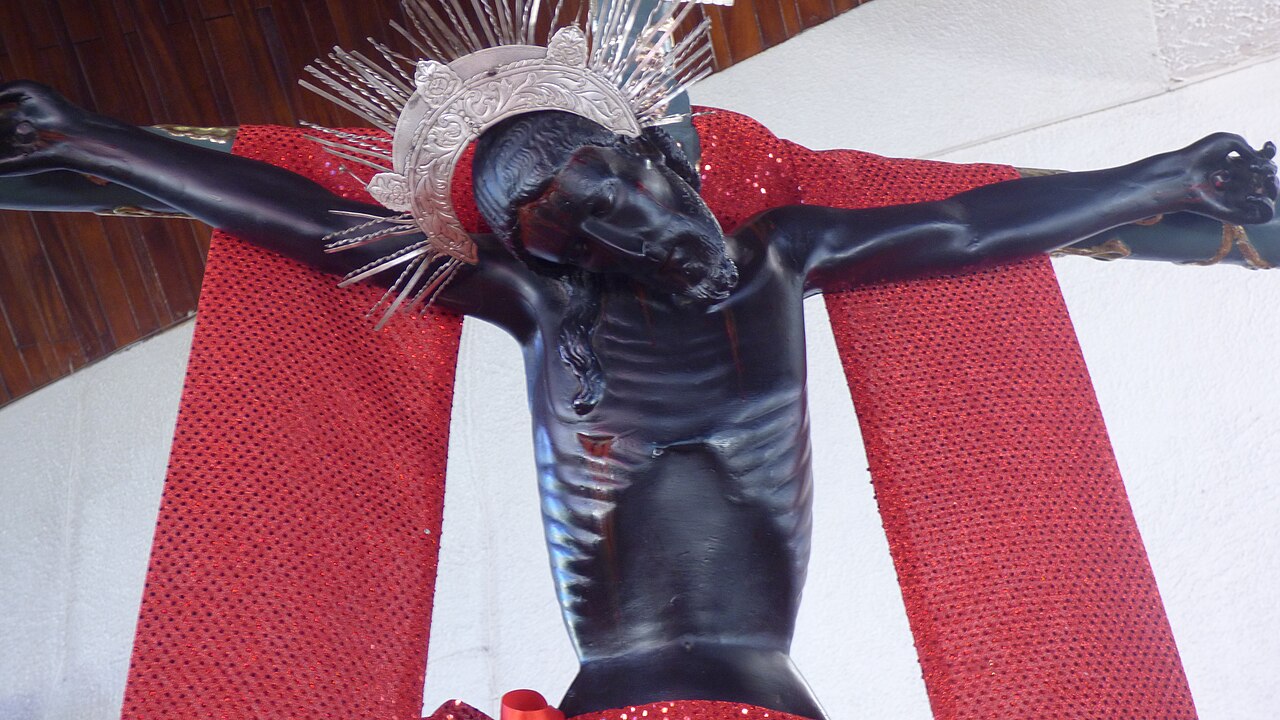
Everything revolves around the Santo Cristo de Esquipulas, the Black Christ, patron of the canton, whom people in town also call el Negrito, with affection. The name comes from Esquipulas, in Guatemala, where the original dark crucifix, carved in the late 1500s, draws pilgrims from all over Central America every January 15; the image venerated in Santa Cruz arrived from Guatemala in 1840. It all begins with the novena, nine days of prayer. On the day before the feast, the Christ is carried through the streets, decorated with palm fronds, malinche flowers (from the flame tree, with its fire-red blossoms) and strips of colored paper. January 15 is the feast of the patron saint, with Mass in the church and a procession through town with the faithful, the parish priest and the reina, the queen of the fiestas, followed by her court.
Topes, bulls and marimba
Alongside the religious side there's the street party. The tope de toros is the parade that brings the day's bulls into town, escorted by clowns and by the cimarrona, the village band of horns and drums that plays by ear, with no sheet music; the program usually also includes the tope típico, the parade on horseback, and a tope for children and teenagers. Then the bulls enter the arena at the Plaza de los Mangos for the montadera: a montador climbs onto the animal's back and tries to stay on as long as he can, and the arena also has room for the sorteadores, people from the crowd who try to dodge the bulls on foot. The bull is not killed. In Costa Rica that's against the law. If the show isn't for you, there's the rest of the fiesta.
And the rest is mostly music. During the fiestas, says the Instituto Costarricense de Turismo, there's traditional dancing, marimba and Guanacaste music, theater, poetry, bombas, rhyming verses that are often cheeky, and retahílas, long strings of rhymes rattled off in a single breath. The marimba is the national instrument. In Guanacaste it's right at home. There are concerts in the evening too, and recent editions have brought in well-known names of Latin American music.
What to eat
Here, you eat corn. At the stands selling traditional food, try arroz de maíz, which despite its name has no rice in it: it's cracked corn cooked for hours with a stewing hen. Then there's gallina achotada, hen seasoned with achiote (annatto), carne mechada, shredded meat, tortillas palmeadas, patted out by hand one at a time, and rosquillas, little rings of corn and cheese to munch on as you walk. Before the Spanish arrived this was the land of the Chorotega people, and about twenty minutes from Santa Cruz lies Guaitil, a village of potters who still work clay with techniques handed down from the Chorotega and even teach them at the elementary school. If you have half a day to spare, go.
How to plan it from Ocotal
January is high season and the heart of the dry season: strong sun, heat and dust. Head out with a hat, water and closed-toe shoes, and get there a little early if you want to see the tope or find a good spot for the montadera, because the town fills up on fiesta days. Then there's the trip back. If you'd rather not drive after dark, a driver is among the services the villa offers on request.
January fiestas, with the pool waiting when you get back
The White House Costa Rica sits in the hills of Ocotal, in Guanacaste, with a pool in the garden and a hot tub on the rooftop terrace, open until 10 pm. A driver and a private chef who cooks Italian are available on request, and Christian, your host, speaks English and Spanish and can arrange tours and transfers.