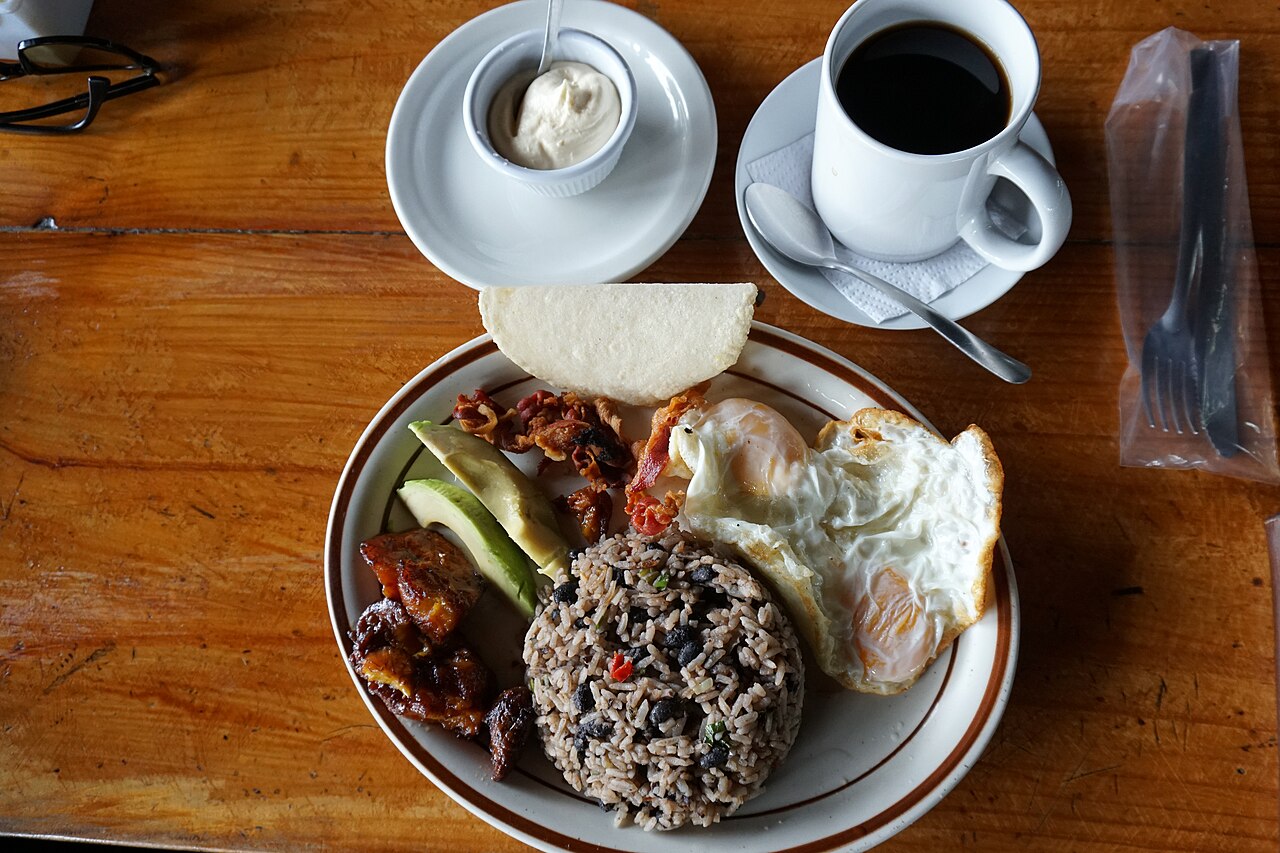
In Costa Rica, the first surprise comes at breakfast. Next to the eggs and the coffee sits a mound of rice and beans fried together, often made with whatever was left over from the night before: it's called gallo pinto, and Costa Ricans (who call themselves ticos) put it at the top of their list of national dishes. It sets the tone for a simple, filling way of cooking built on rice, beans, corn, plantains (the starchy bananas you cook) and fish. In Guanacaste, though, the food has an accent all its own.
Gallo pinto, from breakfast on
The name means “spotted rooster,” and it describes the dish better than any recipe could: white grains of rice speckled with black, or red, beans. In the Central Valley, around San José, it's made with black beans, onion, bell pepper and fresh cilantro, often with a spoonful of Salsa Lizano, a brown vegetable-based sauce that dates back to 1920 and that ticos also pour over tamales and meat. In Guanacaste, cooks usually reach for red beans, and the result is fattier and more toasted. It arrives with eggs, fried sweet plantain, a corn tortilla, fresh cheese and natilla, a thick sour cream. Costa Rica and Nicaragua both claim the dish as their own, and in 2003 the two countries even competed to see who could cook the most of it, a rivalry that has never really been settled.
The casado, lunch at the sodas
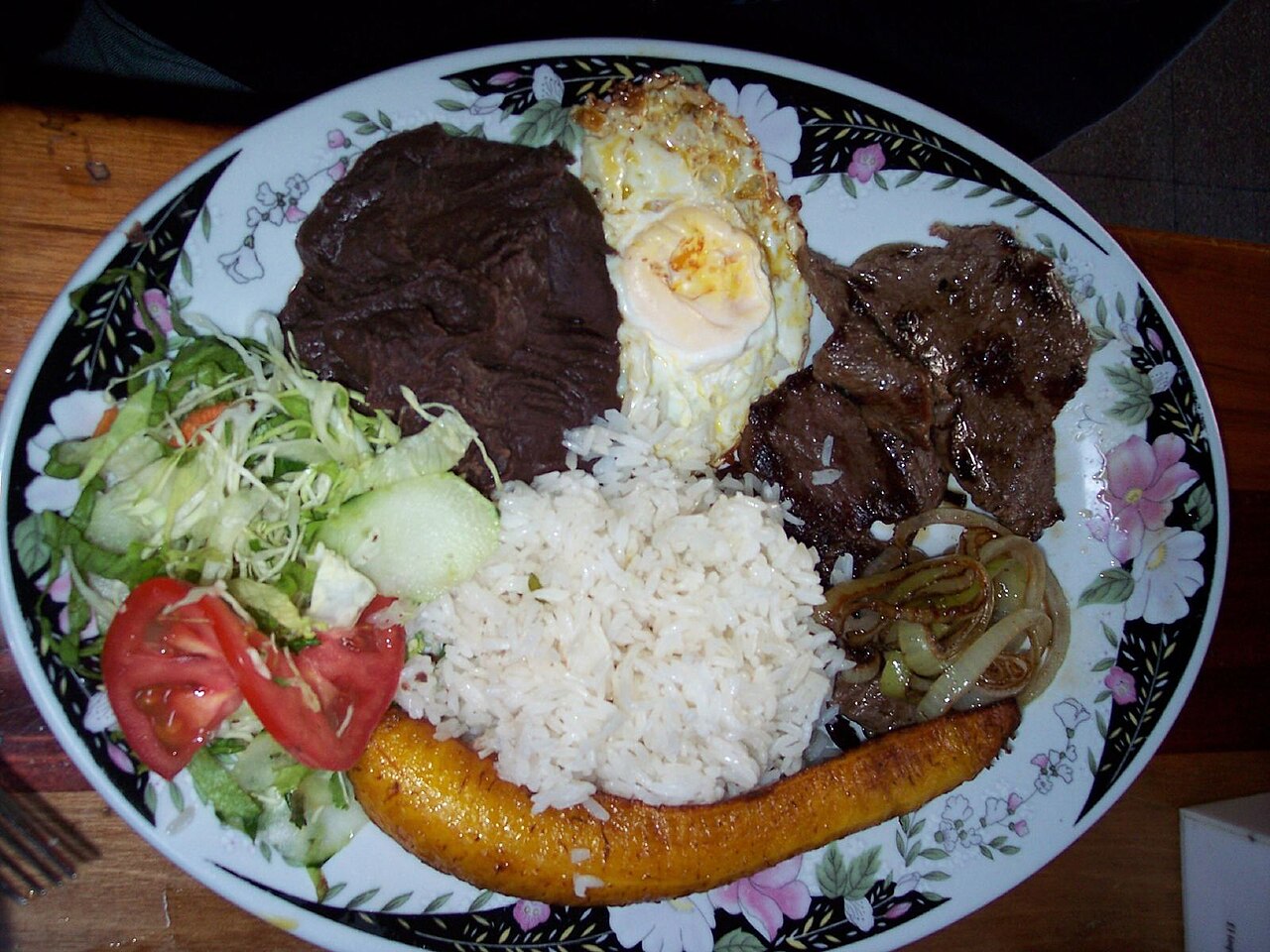
At midday, order a casado. One plate brings white rice, beans, a salad, fried sweet plantain and a serving of meat, chicken or fish, sometimes with an egg or a picadillo, a hash of finely chopped sautéed vegetables. The name means “married,” and there's more than one explanation for it: according to one of the most popular stories, workers in downtown San José asked the local eateries for a plate as generous as the one a married man found waiting at home. The casado caught on in the 1960s, when more and more people were eating lunch near the office. Those eateries are called sodas, which has nothing to do with soft drinks. They're small places, often family-run, with a few tables and traditional cooking. No two sodas make their casado quite the same way, so try it in a few and pick your favorite.
Ceviche, patacones and bocas: flavors of the coast
On the Gulf of Papagayo, fish is part of daily life. Costa Rican ceviche is usually made with corvina, a white sea fish, or with shrimp: the raw fish is cut into small cubes and “cooked” in lime juice with onion and cilantro, and it comes to the table cool and tangy, just right for the hot hours after a morning at the beach. In the early evening, bars bring out bocas, small plates to share over a drink. There are patacones, pieces of green plantain smashed flat and fried, and there's chifrijo, a bowl of beans, chicharrón (fried pork) and a chopped mix of tomato, onion and lime, which started out in the bars of the capital and has been around since the 1970s. At restaurants, one rule is enough: ask for the catch of the day.
Guanacaste corn: rosquillas, tanelas and arroz de maíz
Guanacaste is cattle and corn country, and you can taste it. For the Chorotega, the Indigenous people who lived in this part of the country when the Spanish arrived, corn was sacred, and it is still the base of recipes that many families bake in a clay oven, the horno de barro. Rosquillas are crunchy little rings of corn, dry cheese, egg and butter. Tanelas are a sweet corn bread filled with tapa de dulce (unrefined cane sugar sold in solid blocks), syrup and cheese. Arroz de maíz, despite its name, contains no rice: it's cracked corn cooked with chicken. Then there are chorreadas, sweet corn pancakes eaten with natilla, and chicheme, a drink made from purple corn, ginger and cane sugar.
Grocery shopping and cooking at the villa
Not every meal has to be eaten out. In Playas del Coco, 5 to 10 minutes by car from The White House Costa Rica, there are supermarkets and shops with rice, beans, plantains, fruit and everything you need for a cookout. The villa has an equipped kitchen and a charcoal grill in the garden, and on request a private chef can cook Italian food for you, for the nights when only a good plate of pasta will do. As for gallo pinto, try making it yourself with the rice left over from dinner.
Guanacaste flavors, ten minutes from the villa
The White House Costa Rica sits in the hills of Ocotal, 5 to 10 minutes by car from the restaurants and supermarkets of Playas del Coco. Inside there's an equipped kitchen, with a charcoal grill out in the garden and a private chef on request. And Christian, the host, is always happy to tell you where to eat.