In Costa Rica, the first expression you'll learn is also the one you'll hear most. Pura vida, literally "pure life", means several things at once: it's hello and goodbye, thank you and you're welcome, and the usual answer when someone asks how you're doing. You'll hear it everywhere. After a few days you'll catch yourself saying it too, almost without noticing.
A saying that came from the movies
It wasn't born here, though. It comes from a 1956 Mexican film, ¡Pura vida!, directed by Gilberto Martínez Solares, in which the comedian Antonio Espino, known as Clavillazo, used it as an upbeat catchphrase even when everything was going wrong for him. In Costa Rica the film played in theaters for only a couple of weeks, but the phrase stayed, and over the following decades it became a national saying, almost the country's calling card. Costa Ricans, who call themselves ticos, use it to say that everything is fine, or that it will be. Take it as an invitation to slow down.
Sabaneros, the cowboys of the plains
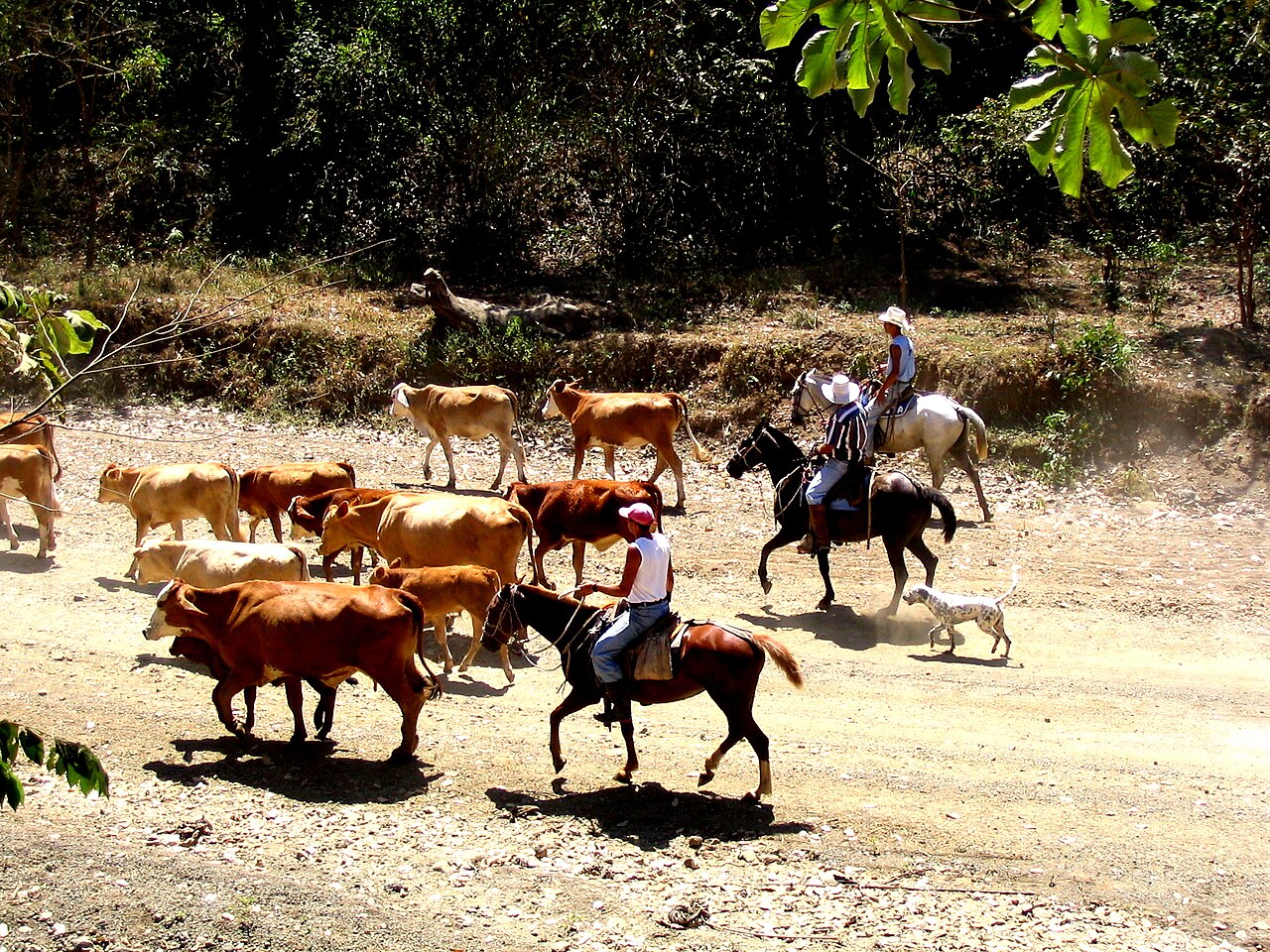
This is cattle country. Long before the beaches and the tourists, Guanacaste was a land of haciendas (large ranches), pastures and livestock, and the men who drove the herds on horseback were the sabaneros, the cowboys of the sabana, the grassy plain. Their culture is still alive in the towns, starting with the topes: horse parades that are part of many patron saint and civic festivals, with riders in their best clothes making their way through the center of town.
Many towns also have a bullring, where the corrida de toros a la tica takes place. This Costa Rican-style bullfight differs from the Spanish one on one essential point: the bull is not killed. In the ring, the montadores try to stay on the bull's back for as long as they can, while the toreros improvisados, spectators who climb down into the arena, tease it and dash away at the last moment. These events draw big, passionate crowds, and for years they have also been the subject of debate.
Marimba, punto guanacasteco and bombas
The soundtrack of the fiestas is the marimba, a kind of large wooden xylophone that in Costa Rica is linked above all to Guanacaste; in 1996 a government decree recognized it as a symbol of the country's culture and tradition. It's the music for the punto guanacasteco, often called Costa Rica's national dance. Partners dance facing each other without touching. The women swirl their full, colorful skirts, and watching them, it's hard to stay in your seat.
Then the music stops. Someone shouts "¡Bomba!" and it's time for the bombas: rhyming verses, teasing or flirtatious, made up on the spot or recited from memory, which a dancer delivers in front of everyone before the marimba starts up again and the dance carries on where it left off. According to the Instituto Costarricense de Turismo, Costa Rica's tourism board, bombas were born in Guanacaste, and today they liven up festivals in much of the country.
Chorotega pottery and giant trees
The oldest roots here are Chorotega, the Indigenous people who lived on the Nicoya Peninsula before the Spanish conquest. In Guaitil and San Vicente, near Santa Cruz, pottery is still made by hand: clay vases patiently burnished and painted with geometric designs, using a technique handed down from one generation to the next within families. If you're passing through, stop. Buying a vase from the person who shaped it is a very different thing from picking one up in a souvenir shop.
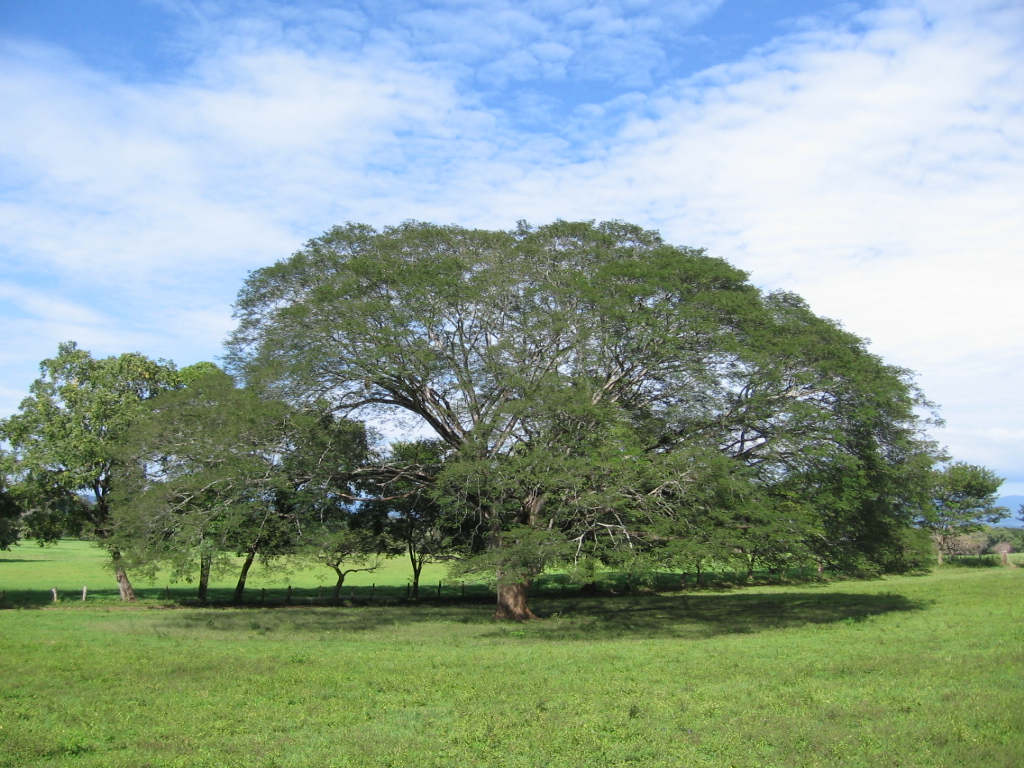
And then there's the tree. The guanacaste (Enterolobium cyclocarpum), which gives the province its name, is a giant of the pastures: it grows to 25 to 35 meters (about 80 to 115 feet), and when it stands alone in a field it spreads its crown into a wide dome, like an enormous umbrella to shelter under in the hottest hours. The name comes from Nahuatl, the language of the Aztecs, and refers to the shape of its fruit, dark curled pods that look like ears. It has been Costa Rica's national tree since 1959.
Christian, the villa's host, is Italian and speaks Spanish as well as English, so ask him whether there's a fiesta in a nearby town during your stay, with a tope or an evening of marimba. The calendar changes every year, and in Guanacaste the best news still travels by word of mouth, from one pura vida to the next.
Guanacaste's fiestas, with a host who speaks Spanish
The White House Costa Rica is in the hills of Ocotal, between Playa Ocotal and Playas del Coco. Christian is Italian and also speaks English and Spanish; he shares tips on beaches, restaurants and excursions and can arrange tours and transfers.