One detail tells you how much coffee matters in Costa Rica: in 2020 a law made it a national symbol, in the same company as the flag and the guanacaste tree, the tree that gives the province its name. The reason is history. For much of the nineteenth century coffee was the country's main export, and to this day gallo pinto comes to the breakfast table with a steaming cup beside it. Then there's the fruit. Plenty of it, and some you won't find at the grocery store back home.
Two centuries of coffee
The first plantations went in around 1779 on the central plateau. By 1832 sacks were already sailing to Chile, where they were re-bagged and shipped on to England under a Chilean label, and in 1843 the first direct shipment left for Britain. From the mid-1800s, coffee came down from the Central Valley to the Pacific port of Puntarenas on carretas, wooden carts pulled by oxen, a trip of ten to fifteen days across the mountains. Today the tradition of the boyeros, the oxcart drivers, and their brightly painted carretas is recognized by UNESCO as Intangible Cultural Heritage. Even San José's Teatro Nacional, which opened in 1897, was built with money from a tax on coffee exports.
The chorreador, coffee the tico way
Forget espresso. At home, Costa Ricans make coffee with a chorreador: a wooden stand with a cotton bag hanging from it, held open by a wire ring, and the cup or pot sitting underneath. You put the ground coffee into the dampened bag, slowly pour in water just off the boil and let the coffee drip through; the name comes from chorrear, “to pour in a thin stream.” If you make pour-over at home, the idea will feel familiar. The result is a long, clean cup to sip without hurrying: café chorreado, the coffee of the ticos, as Costa Ricans call themselves.
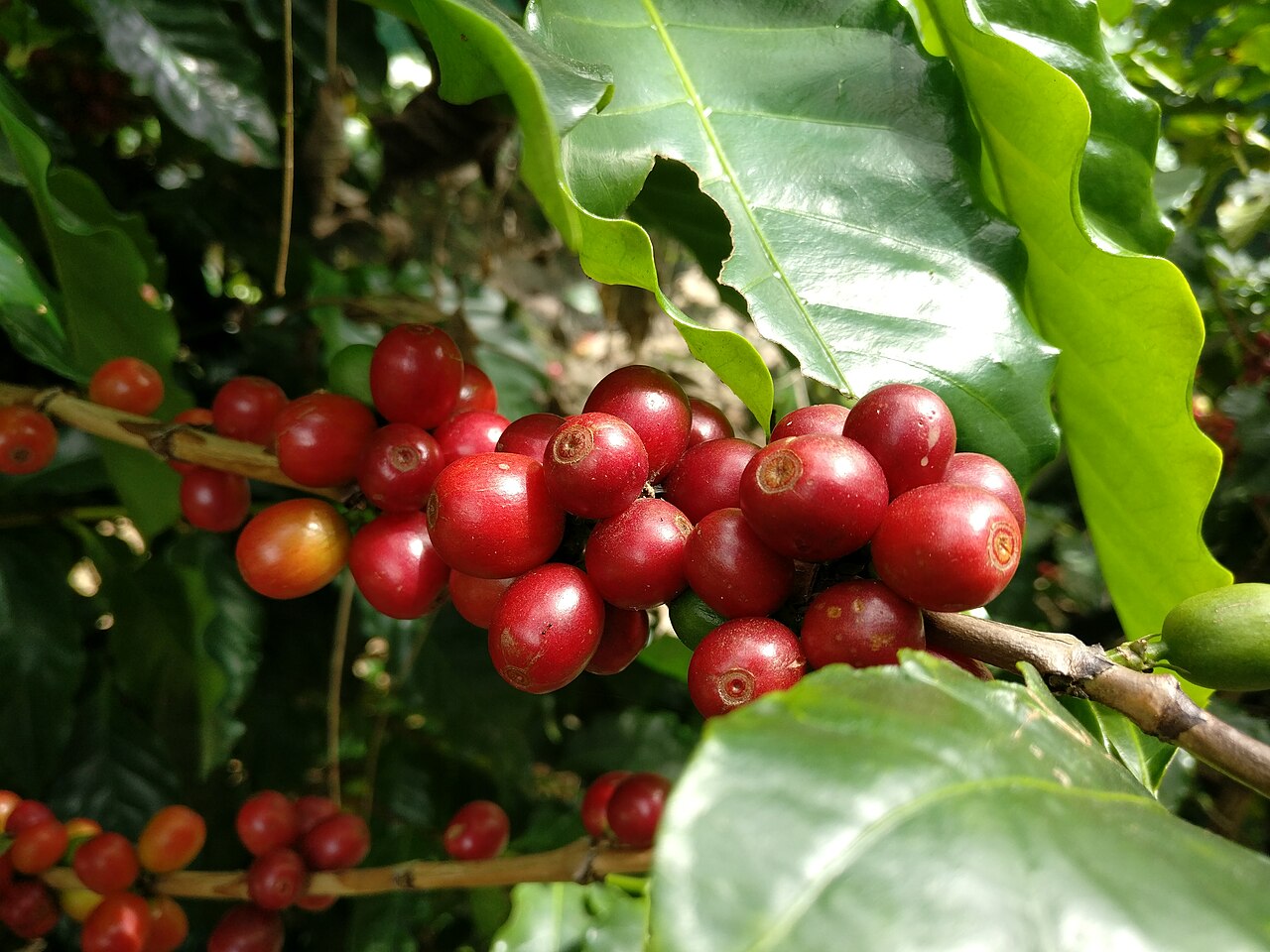
The best-known growing regions are in the mountains, above 1,000 meters (about 3,300 feet). Tarrazú, in the Los Santos area south of San José, even has its own protected designation of origin. The harvest follows the altitude: it starts earlier at lower elevations and peaks between November and February, so if your route crosses the mountains in those months, you'll see the plants heavy with red cherries, like the ones in the photo.
Fruit you drink: frescos and agua de pipa
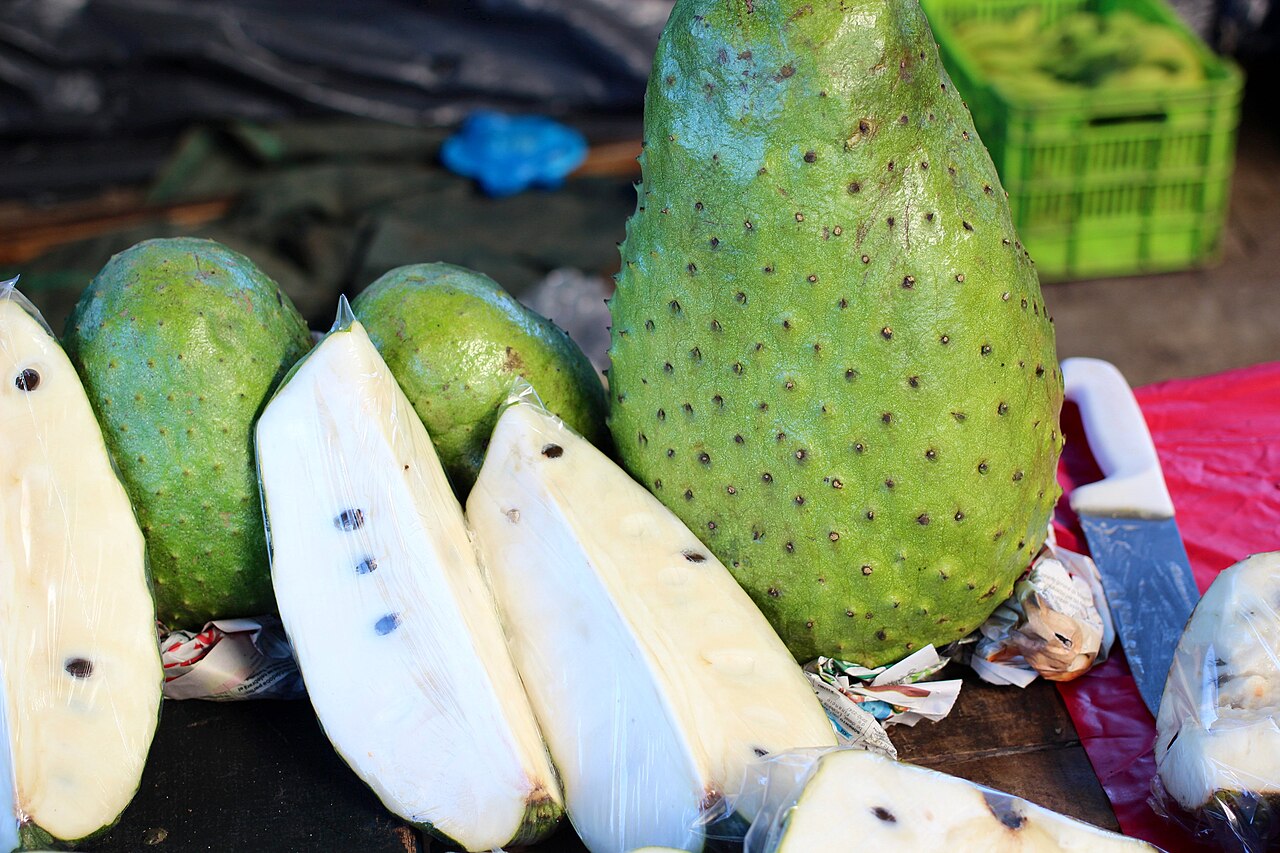
In Costa Rica, fruit is something you drink before you even get around to eating it. The fresco is the everyday drink: fruit blended with water or milk, and the options change with whatever is available. Flavors worth trying include mango; guanábana (soursop), big and spiny outside, white and creamy inside; and cas, a wild guava native to Costa Rica whose flesh is so sour that, blended with water and sugar, it becomes the most refreshing thing you'll drink all afternoon. Then there's agua de pipa, which you drink straight from a green coconut.
Fruit, season by season
Papaya and bananas are around all year, and Costa Rica is the world's leading pineapple exporter. Other fruit keeps to its season. Mangoes arrive between February and May, at the height of the dry season, and around Liberia there are orchards that export them to the United States. From July to November, with the rains, come mamón chino, or rambutan: red fruit covered in soft spines that you open with your fingers to find sweet white flesh a lot like lychee. Pejibaye, the fruit of a palm, is eaten cooked, with a spoonful of mayonnaise or natilla (Costa Rican sour cream), and in season it's sold already boiled at markets and at stands along the road. To taste a bit of everything, go to the feria del agricultor, the farmers' market held every week in many towns.
Our advice is to stock up as soon as you arrive. The supermarkets in Playas del Coco are 5 to 10 minutes by car from The White House Costa Rica, and fruit and coffee for breakfast on the rooftop terrace, looking out over the hills, is the easiest way to start the day.
Coffee in the morning, fruit by the pool
The White House Costa Rica has an equipped kitchen, a pool in the garden and a rooftop terrace with an outdoor lounge and bar corner. The supermarkets of Playas del Coco are 5 to 10 minutes away by car, and Christian, the host, is happy to tell you where to try the local food.