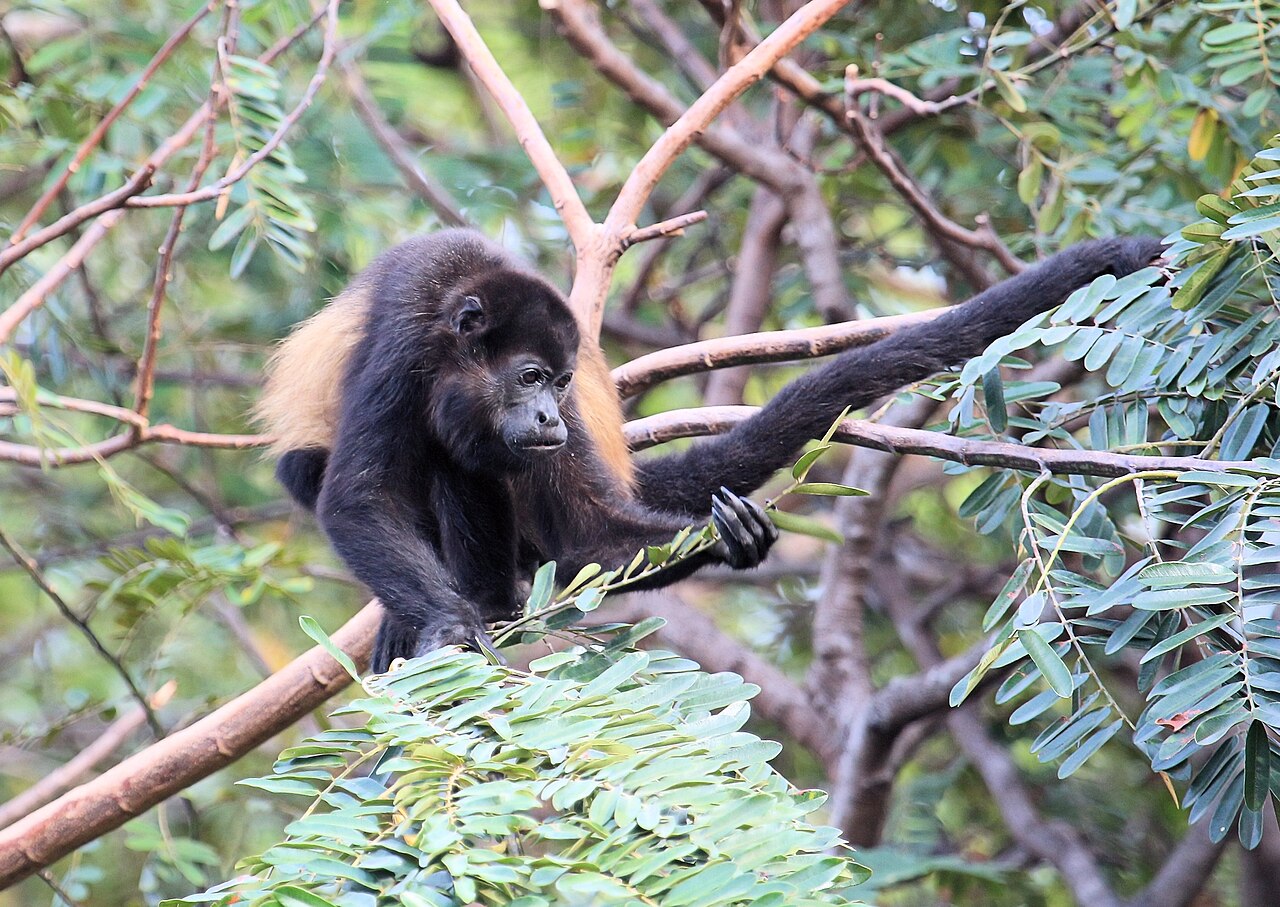
At dawn in Guanacaste, you may wake up to a deep, low roar coming from the trees. It sounds like a very large animal. In fact it's howler monkeys, known in Costa Rica as mono congo: the males call mostly at dawn and dusk, using a hollow bone in the throat as a sounding box, and you can hear them a mile or more away. The first time, it's a little unnerving. Before long it becomes the sound of morning, as regular as an alarm clock nobody set.
The dry forest and its two seasons
Guanacaste is tropical dry forest country. In the months without rain, from December to April, most of the trees drop their leaves and the hills turn gray and straw-colored; when the rains return in May, the landscape goes green again. Farther north, toward the border with Nicaragua, the Área de Conservación Guanacaste protects some of the best dry forest habitats left between Central America and northern Mexico, and it has been a UNESCO World Heritage Site since 1999. For wildlife watchers, the bare season has an upside: the forest opens up, and among the leafless branches monkeys and birds are much easier to spot.
Howler monkeys and capuchins
The mono congo, or mantled howler monkey (Alouatta palliata), is easy to recognize by the fringe of golden hair along its flanks. It's a calm animal. It eats mostly leaves, a diet that provides little energy, so it spends about three quarters of the day resting, often motionless on a high branch, which is why you usually hear it long before you see it. White-faced capuchins, called mono carablanca here, are far livelier: curious and lightning quick, they move in troops through the treetops. Never try to attract them with food.
Iguanas and garrobos in the sun
On stone walls, rocks and low branches, in the hottest part of the day, you'll often see big lizards lying perfectly still in the sun. The dark gray ones, with rings of spines around the tail, are garrobos, or black spiny-tailed iguanas (Ctenosaura similis). They eat mainly leaves, flowers and fruit, and Guinness World Records lists them as the fastest lizards on Earth, with sprints clocked at 34.6 km/h (21.5 mph). Green iguanas, which grow bigger, prefer trees near water. Neither one is looking for trouble, so just keep a little distance and don't try to touch them.
Pelicans, magpie-jays and turtles
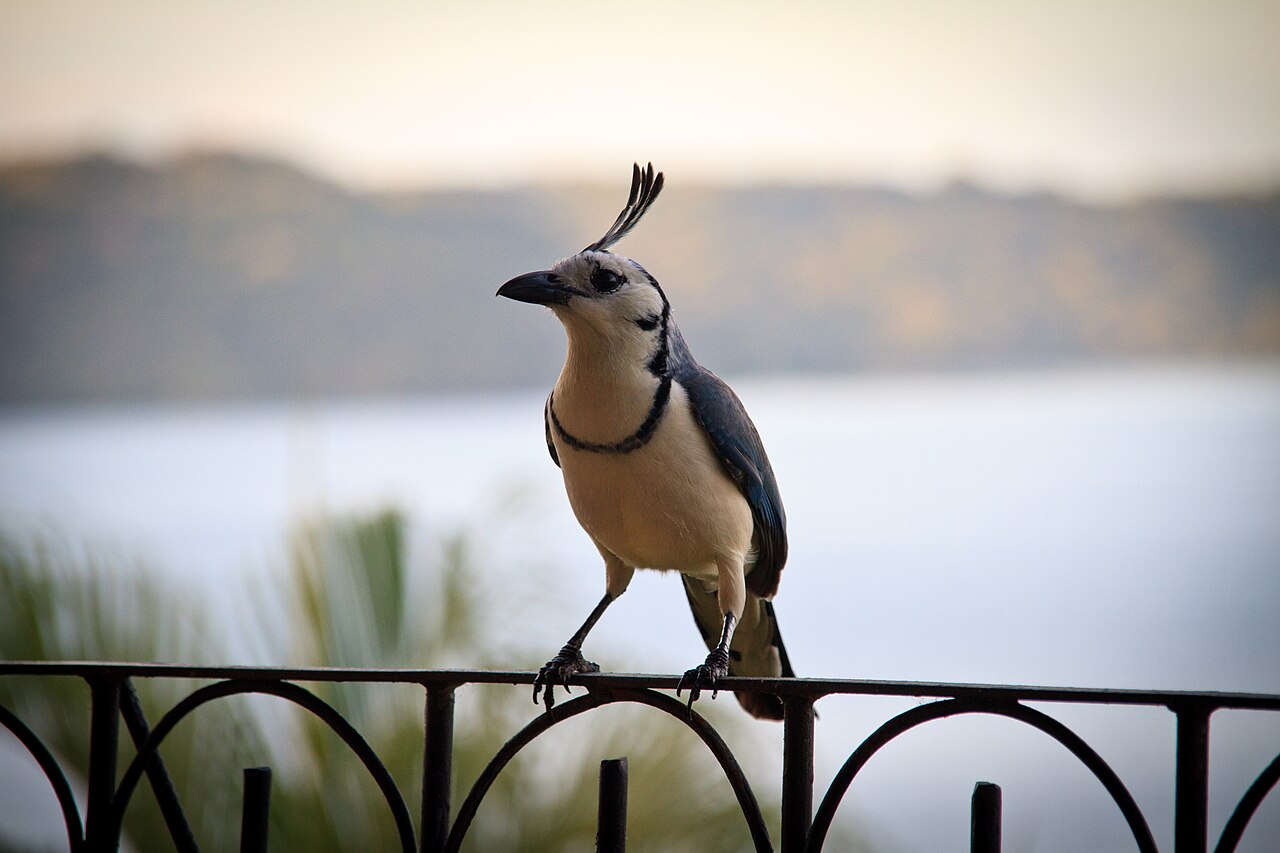
Over the water, the brown pelican is in charge. It flies in single file just above the waves, or spots fish from high up and plunges in headfirst, bill forward, vanishing for a moment below the surface: along the Pacific coast it's a common sight. In the forest, it's hard to miss the urraca copetona, the white-throated magpie-jay. Blue and white, with a curled crest of feathers on its head and a very long tail, it travels in noisy groups and sometimes follows people along a path, scolding them as it goes.
Farther south along the Guanacaste coast, there are beaches where sea turtles come ashore to lay their eggs. At Playa Grande, in Las Baulas National Marine Park, leatherback turtles (baula, in Spanish) nest in the largest colony on the Pacific coast of the Americas, usually between October and May. At Ostional, olive ridley turtles are famous for their arribadas, mass nestings in which thousands of females come up the same beach. These are protected areas. Visit them with authorized guides, and check the rules and the nesting seasons with SINAC, Costa Rica's National System of Conservation Areas (Sistema Nacional de Áreas de Conservación).
Watching without disturbing
A few rules apply everywhere. Don't offer food, not even a piece of fruit; keep your distance; don't touch or chase animals, even for a photo. The best times are the first hours of the morning and the last light of the afternoon, when it's cooler and animals are on the move, and around here a light pair of binoculars is more useful than a telephoto lens. From the villa's rooftop terrace, which looks out over the hills and the valley, your morning coffee can easily turn into a small wildlife lookout.
Guanacaste's wildlife, a 15-minute walk from the beach
The White House Costa Rica sits in the hills between Playa Ocotal and Playas del Coco, with a private garden, a hammock and a rooftop terrace looking out over the hills and the valley. Playa Ocotal is a 15-minute walk away and Rincón de la Vieja National Park about an hour and a half, and Christian can suggest excursions and arrange tours.