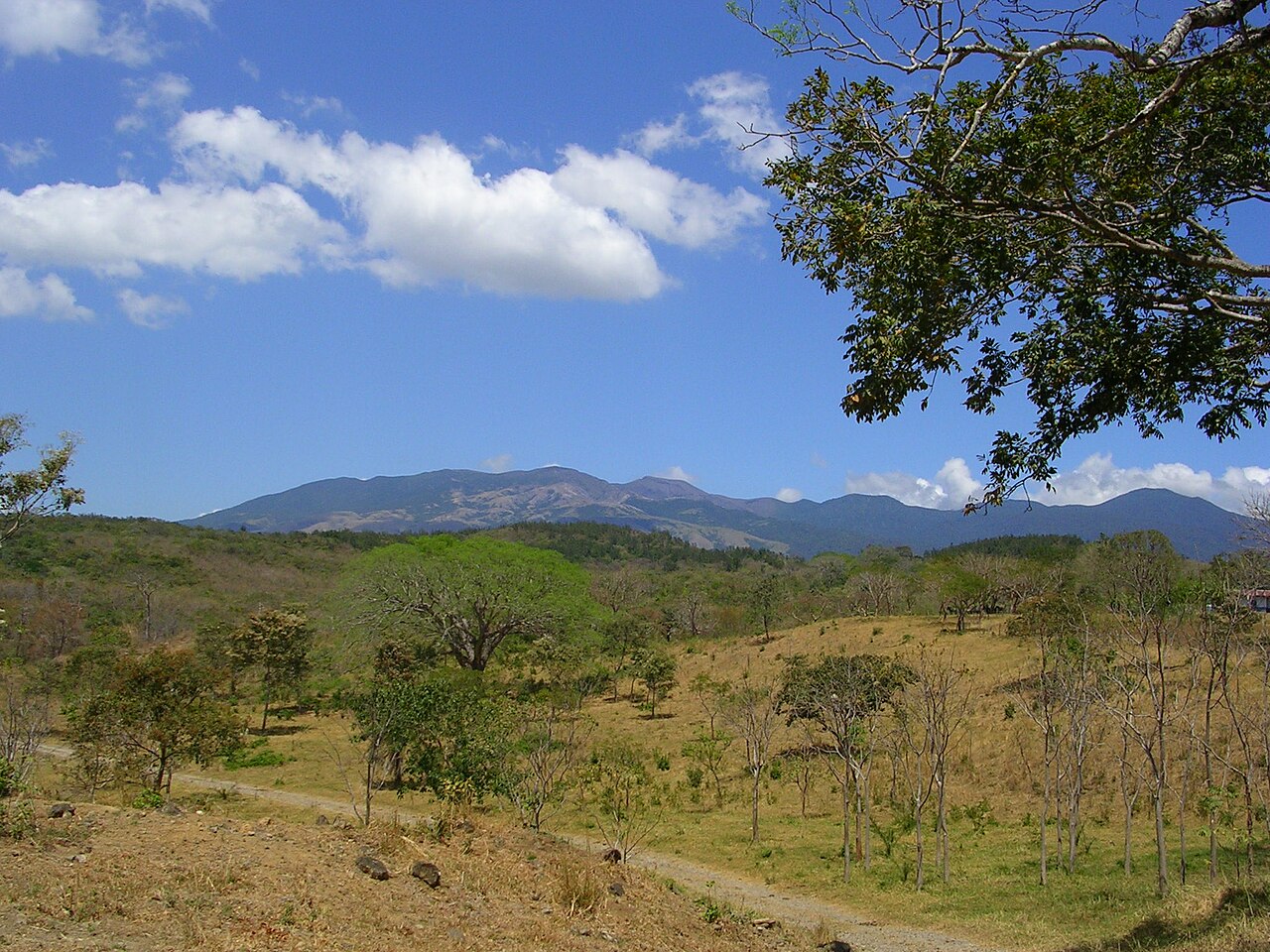
You can already see Rincón de la Vieja from the plains around Liberia: a dark ridge about twenty kilometers (12 miles) long, with a dozen craters and cones. It's one of the three volcanoes in Costa Rica considered active, along with Poás and Turrialba. It stands 1,916 meters (6,286 feet) high, and the national park that protects it, created in 1973, is part of the Guanacaste Conservation Area, a UNESCO World Heritage Site. From the villa it takes about an hour and a half. Leave early.
A legend behind the name
Rincón de la Vieja means “the old woman's corner.” The legend, which you'll also find on the park's official page, tells how Princess Curubandá, daughter of the chief Curubandé, fell in love with Mixcoac, the chief of an enemy tribe, and how her father threw him into the crater. A child was born. He too ended up in the crater, thrown in by his mother so he could be with his father, and from then on she lived up on the mountain, grew old and became a famous healer. The sick who climbed up to find her said they were going “al rincón de la vieja,” to the remote corner where the old woman lived.
Las Pailas: fumaroles and boiling mud
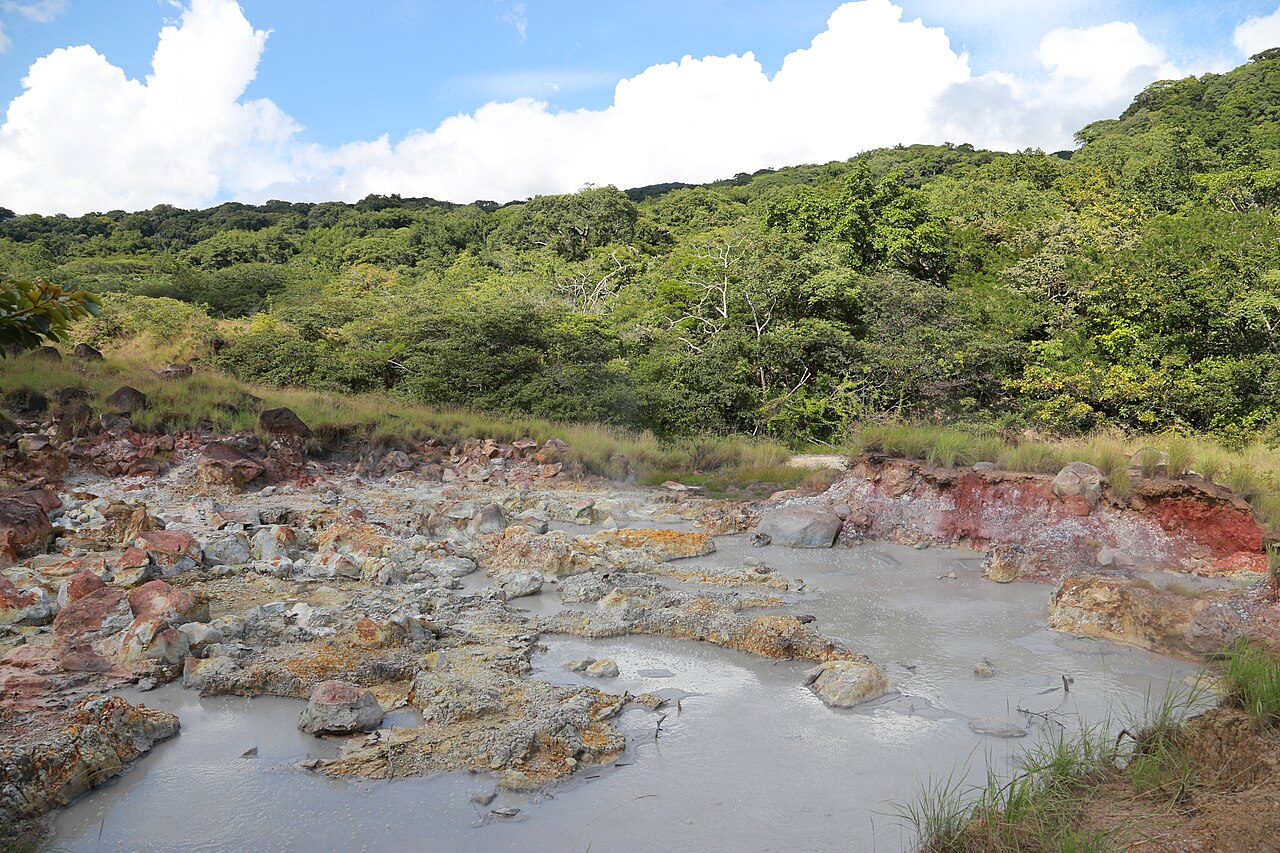
The Las Pailas sector, with the visitor center, is where the main trails begin. The trail of the same name is a loop of about 3 kilometers (2 miles), marked with green arrows, with grades no steeper than 12 percent and about two hours of walking. It passes fumaroles, pools of water, a fumarolic lagoon, the so-called volcancito (“little volcano”) and the pailas, the “cauldrons” of gray mud that bubble away and give the sector its name, at temperatures between 78 and 106°C (172 to 223°F). Along the loop, the dry forest gives way to moist forest. Stay on the trail. Around the pools the ground is extremely hot and the air smells of sulfur.
The waterfalls: La Cangreja and Escondida
The waterfall trail also starts at the visitor center. It's an out-and-back trail marked in orange: the catarata (waterfall) La Cangreja is 5 kilometers (3 miles) away and La Escondida, meaning “hidden,” 4.3 kilometers (2.7 miles), with a steep climb at the end, and the round trip takes four to five hours. No swimming in the pools. If you want to see the fumaroles and the waterfalls on the same day, hike Las Pailas as soon as the park opens and then decide based on the heat and your legs: the two together make a full day, and you'll need plenty of water.
Santa María: the hot springs
On the other side of the park is the Santa María sector, which you reach from Liberia on a road where a 4x4 is recommended. Patience helps. Short trails start around the old casona, the manor house, one of the few left that still tell the story of Guanacaste's cattle-ranching culture. The Colibrí trail, 470 meters long, passes an old trapiche (a sugarcane mill), the little cold-water waterfall of the Bosque Encantado (“enchanted forest”) is 800 meters away, and at about 3 kilometers (2 miles) you reach hot springs of sulfurous water that flows down from the volcano. If you still have the energy, climb to the mirador, the lookout over the Guanacaste plains and Miravalles Volcano.
Wildlife is easiest to spot in the early hours. The park is home to capuchin, howler and spider monkeys, coatis, agoutis and armadillos, and about 300 species of birds have been counted here; there's also a wild population of guaria morada, the purple orchid that is Costa Rica's national flower. Walk slowly. In the evening, back in Ocotal, the hot tub on the villa's rooftop terrace is open until 10 pm, and it's just what your legs need.
An hour and a half from the volcano
The White House Costa Rica is about an hour and a half from Rincón de la Vieja National Park: leave early in the morning and you'll be back in time for a swim in the pool. If you'd rather not drive, a driver is available on request, and Christian, the host, can organize the trip for you.