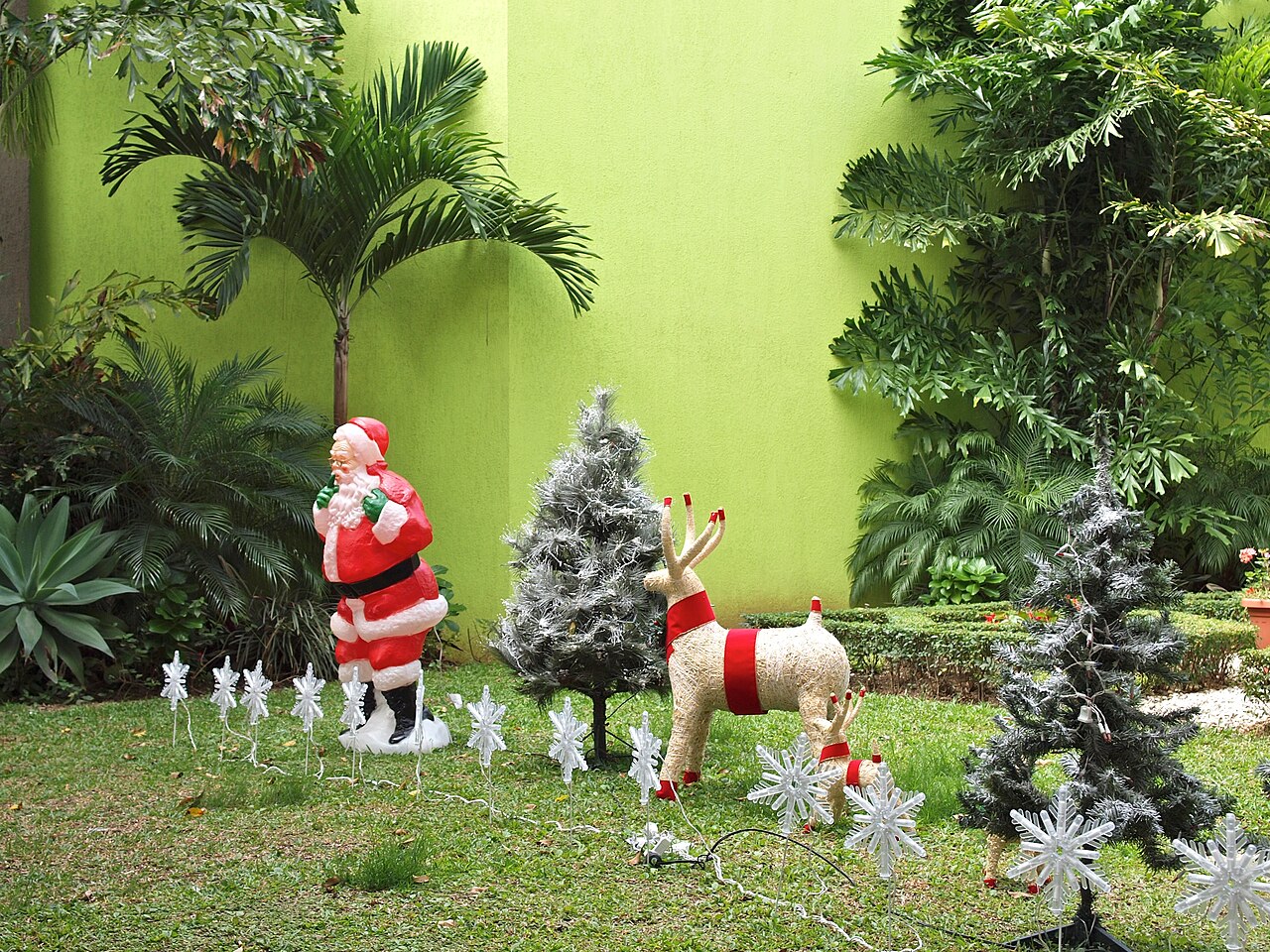
Up north, December means winter. In Costa Rica it means summer: Costa Ricans call the dry season verano, “summer,” and the rainy season invierno, “winter,” and in Guanacaste the dry months usually begin between late November and early December. So just as the Christmas lights go up back home, the sky over the hills of Ocotal clears and stays that way for weeks. Christmas in the heat, then, with Santa and his reindeer on the lawn and palm trees behind them, as in the photo. It takes a moment to get used to.
The weather in December and January
Very little rain, lots of sun. In Liberia, according to averages from the Instituto Meteorológico Nacional, December sees about two rainy days and January almost none. The dry season also brings the trade winds, which often blow hard between December and March, especially in the north of the province: they make the days clear and breezy and can cool the water in the gulf. Days are a little shorter than in June, since around Christmas the sun rises at about 6 am and sets at about 5:30 pm, so it's worth starting early.
Mind the clock, too. Costa Rica stays on Central Standard Time (UTC-6) all year and never switches to daylight saving time. In December that matches US Central time: one hour behind New York and Toronto, two hours ahead of Los Angeles and Vancouver, six hours behind London. So when the ball drops in Times Square, it's 11 pm in Guanacaste, and when Paris and Madrid ring in the New Year, it's only 5 pm on December 31: time for a video toast with friends in Europe and, half an hour later, the sunset.
Christmas, tico style
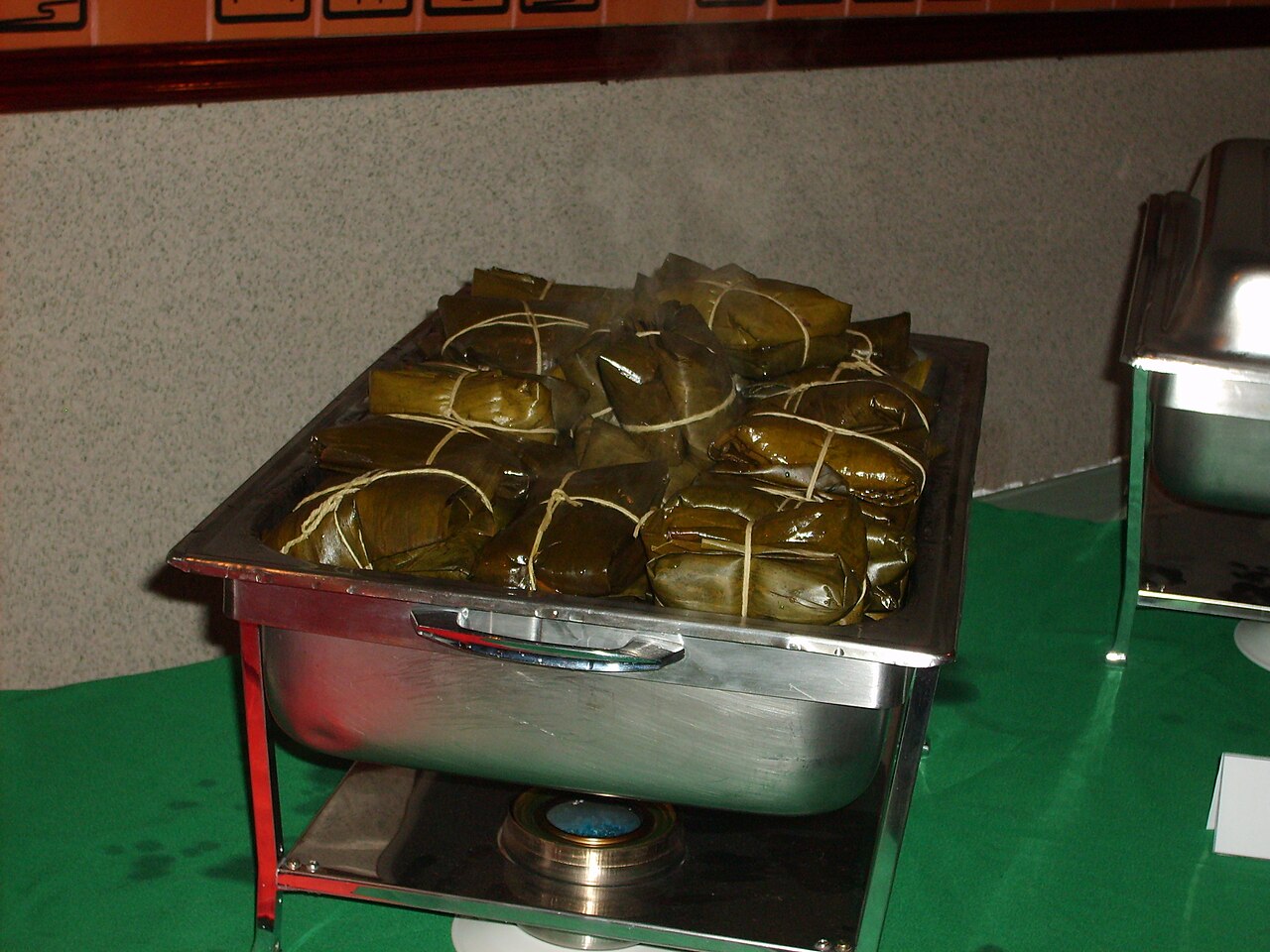
Ticos, as Costa Ricans call themselves, have a Christmas with a smell all its own: tamales. In December, many families get together for the tamaleada, the afternoon when everyone makes them together: corn dough filled with pork, chicken, rice and vegetables, wrapped in banana leaves, tied with string and boiled for hours. They're eaten all through the holidays, even at breakfast with coffee, alongside agua dulce, water sweetened with raw cane sugar, or rompope, a thick, eggnog-like drink of eggs, milk, sugar, vanilla and cinnamon. On the dessert table there's queque navideño, a dark fruitcake studded with candied fruit. At home, families set up the portal, the nativity scene, which many try to finish by December 8, and tradition says that anyone who stops by to see it gets a tamal.
Meanwhile, the whole country goes on vacation. The school year ends in December and starts again in February, the aguinaldo (a mandatory Christmas bonus that works like a thirteenth month's pay) must be paid by December 20, and many Costa Rican families use it for a few days at the beach.
High season: how to plan
From December to April Costa Rica is in high season, and the weeks between Christmas and New Year's are among the most requested of the year: North American and European travelers chasing the sun arrive just as tico families start their own vacations. In practice, book your accommodation, flights and rental car months in advance, and if you'd like to eat out on the evening of December 24 or 31, reserve a table too.
The holidays at the villa
Spending the holidays away from home calls for space and a little peace. The White House Costa Rica, in a quiet, private area in the hills of Ocotal, sleeps up to 6 in three bedrooms, with a pool in the garden and a rooftop terrace with a hot tub, open from 7 am to 10 pm. On request, a private chef can cook your Christmas lunch, Italian style, or you can fire up the charcoal grill in the garden. Self check-in, from 1 pm to 10 pm, makes things easier when you land after a long flight. And if you're video-calling family in Europe on Christmas Eve, remember they're six or seven hours ahead: your lunchtime is their dinner.
Christmas in the sun: ask us about dates early
Holiday dates need to be locked in well in advance. Message us on WhatsApp: when you book direct, rates are up to 10% lower than on booking platforms, and Christian, the host, speaks English, Spanish and Italian and can arrange transfers and tours for the days of your stay.